Proper functioning of the spine
Chiropractic
Chiropractic = performed by hand
Chiropractic is considered the third largest therapeutic healthcare profession in the world, after Medicine and Dentistry. It is a complementary healthcare discipline that does not use medication or therapeutic machinery. It focuses on the treatment of musculoskeletal disorders of the spine, as well as of the extremities.
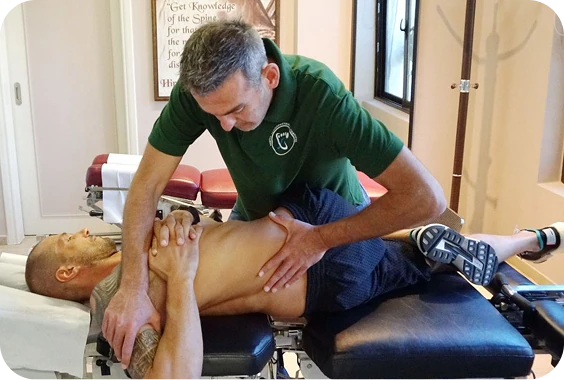
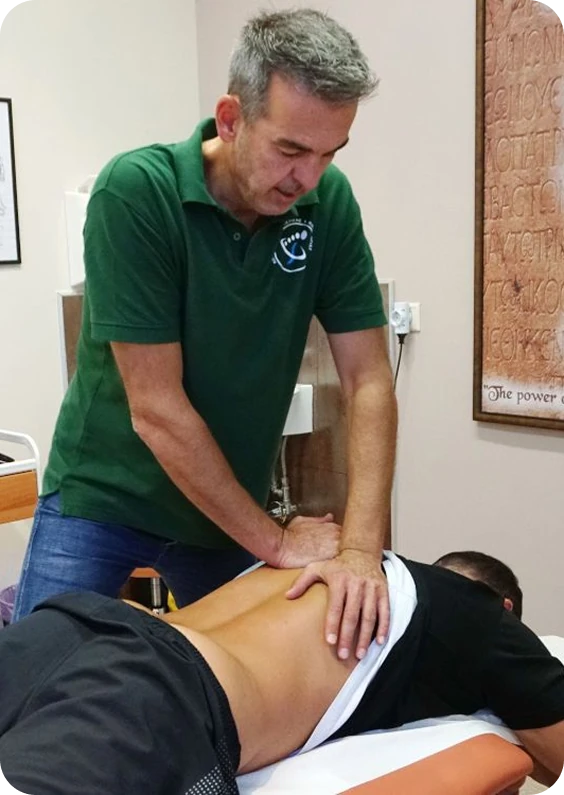
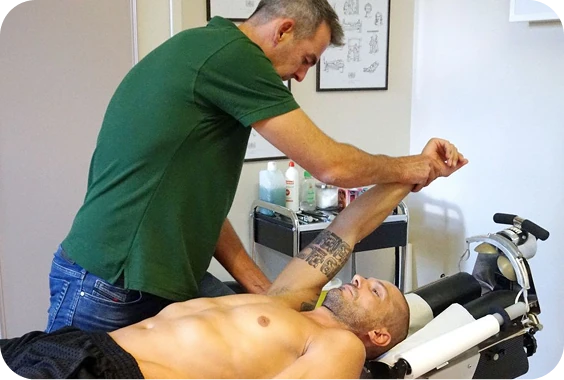
Chiropractic combines practice, science and art, aiming to activate the nervous system, which in turn helps restore musculoskeletal problems of the human body. This is achieved by restoring the body’s normal function through specific, skilful and carefully studied manipulations of the spinal and peripheral joints. These manipulations are called “adjustments.”
History of Chiropractic
The history of chiropractic dates back approximately 2,000 years. It was first practiced by the father of Medicine, Hippocrates, who taught its principles to his students in the ancient Greek Asklepieia (healing temples). In his work On the Articulations, Hippocrates emphasised that the primary cause of disease should be sought in the spine.
Later, other ancient civilisations, including the Chinese and the Egyptians, also used manual techniques as a form of treatment for musculoskeletal disorders.
The founder of modern chiropractic is considered to be the Canadian Daniel David Palmer (1845–1913), who lived in Iowa, USA, and founded the first chiropractic college in 1897. Since then, the development of chiropractic has been rapid, particularly in the United States, Canada and Australia, as well as in European countries such as England, France and Spain.
Today, there are dozens of chiropractic universities worldwide, graduating thousands of chiropractors each year.
The theory of Chiropractic
The human body is a complex, self-regulating mechanism, and the central nervous system is responsible for coordinating all of its functions. The body’s organs operate based on signals transmitted through the nervous system. When there is a disruption in transmission, the flow of these nerve impulses is reduced or altered, and the body begins to malfunction, creating a predisposition to disease.
One of the main causes of disrupted nerve impulses, and one that directly concerns chiropractic, is the misalignment of vertebrae or other joints of the body (commonly referred to as a “sprain” or “joint blockage”). This misalignment reduces the range of motion in the affected area, resulting in pressure or tension on both the central nervous system and the peripheral nerves.
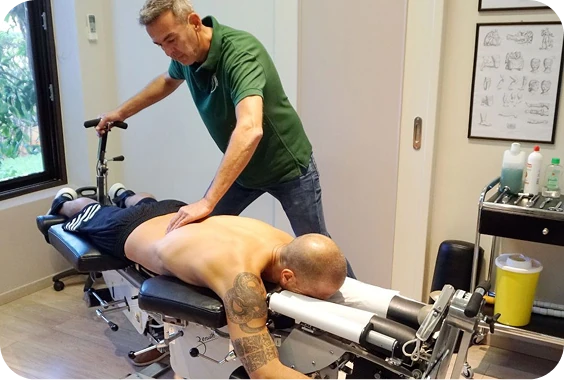
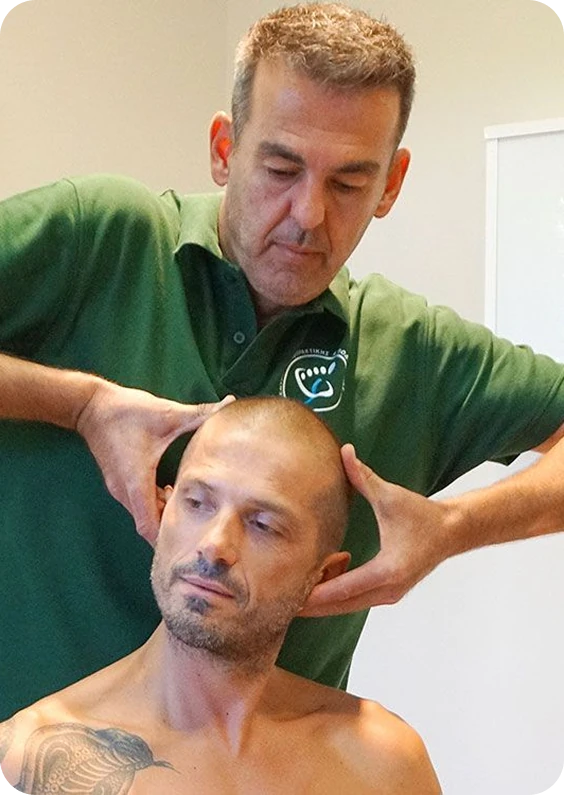
The chiropractor, by applying “adjustments,” restores these misalignments of the vertebrae or other joints and re-establishes the proper function of the nervous system, thereby allowing the human body to perform at its full potential.
Explanation of musculoskeletal dysfunction
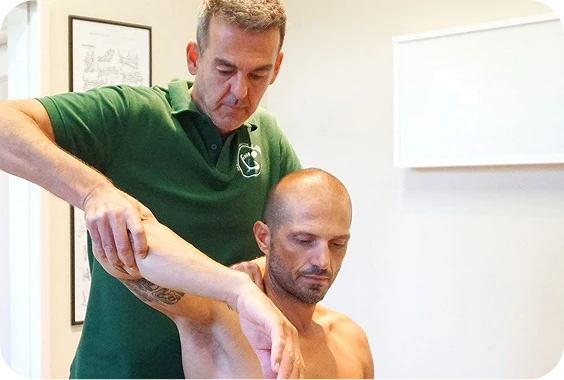
When a problem is not treated properly and in a timely manner, a vicious cycle of continuous micro-trauma develops. Because the muscles contract more than normal, movement between the intervertebral discs and vertebrae becomes restricted, the nerves become irritated, and eventually chronic inflammation develops in the affected area.
Common symptoms of this vicious cycle include localized pain, pain radiating to the upper and lower limbs, numbness, cervical syndromes, headaches, dizziness, vertigo, lower back pain, sciatica, disc disorders, sore and stiff muscles, and many others.
Conditions treated with Chiropractic
Where Chiropractic care makes a difference
Cervical spine syndrome
Headaches, migraines, vertigo, muscle tightness and restricted neck movement, as well as numbness and pain radiating to the upper limbs.
Lower back pain and sciatica
Disc disorders and pressure on spinal nerves, causing pain and numbness radiating to the lower limbs, and in some cases even muscle weakness or atrophy.
Peripheral joint problems (Upper & lower limbs)
Joint misalignment, subluxation, and joint restriction ("locking").
Overuse syndrome
Tennis elbow (epicondylitis), Achilles tendinitis, rotator cuff syndrome, and carpal tunnel syndrome (early stages).
Skeletal disorders and postural abnormalities
Leg length discrepancy (structural or functional), scoliosis, kyphosis and lordosis.
Sports injuries
Sprains, tendon injuries, muscle strains and muscle spasms.
Who can benefit from Chiropractic care and how it works
Chiropractic care can help people of all ages and professions. It can also support cases where children or elderly individuals suffer from osteoporosis, osteoarthritis, rheumatoid arthritis and other complex conditions. In such cases, chiropractic may intervene using alternative, gentler techniques to mobilise the affected joints safely.
Every chiropractor who has studied at an internationally recognised university is fully trained to examine the spine, muscles and nerves of the entire body. The process begins with taking a detailed medical history, followed by palpation and orthopaedic, neurological and chiropractic assessment, as well as the evaluation of imaging tests such as X-rays, bone scans, MRI and CT scans.
The chiropractor then explains the condition to the patient and advises whether chiropractic care is appropriate or if referral to another specialist is necessary (for example, in cases of fractures, pathological conditions or advanced non-correctable cases).
If a chiropractic approach is agreed upon, appropriate and specialised techniques are applied to mobilise the joint and restore its normal range of motion, while pain and inflammation in the area begin to subside.
The role of the chiropractor is to help restore and, most importantly, maintain the proper function of the entire musculoskeletal system, enabling the body to perform at its full potential. In this way, early “silent” dysfunctions can be identified and their future impact on the vertebrae, nerves and muscles throughout the body may be prevented.
Duration of Treatment – Results
As chiropractic care does not involve the use of medication or electrical modalities, the duration of treatment depends largely on the patient’s own body and healing response. It is influenced by the type, duration and severity of the condition, the patient’s age and psychological state, any previous injuries, diet, environment and nature of work — and most importantly, whether the patient follows the chiropractor’s instructions after each session.
Generally speaking, 3 to 5 visits at regular intervals are sufficient for the first signs of improvement to become noticeable, or in some cases, for the issue to be resolved completely. In cases of simple muscle spasm, just a few prescribed home exercises may be enough to resolve the problem. In cases of chronic spinal degeneration, a longer treatment period may be required. Finally, in certain severe and irreversible conditions, only partial symptom relief may be achieved, which is why periodic follow-up visits are recommended for reassessment.
Scientific Research
Comprehensive studies conducted in the United States and other developed countries around the world have shown that patients receiving chiropractic care are able to return to work in roughly half the time compared to those who rely on traditional treatment methods. Chiropractic care does not require medication, while hospital stays, hospitalisation costs and recovery periods are reduced. At the same time, most patients are able to continue working during their course of care.
The above advantages of chiropractic have been highlighted in scientific research. Some of these studies are listed below:
- Low Back Pain of mechanical origin - a randomised comparison of chiropractic and hospital outpatient treatment) Medical Research Council, UK, British Medical Journal, June 2, 1990, Vol.300.
- Manga P, Angus D et al. (1993) The Effectiveness and Cost Effectiveness of Chiropractic Management of Low-Back Pain, Pran Manga and Associates , University of Ottawa, Canada.
- United Kingdom Back Pain Exercise and Manipulation (UK BEAM) Randomised Trial:Effectiveness of Physical Treatments for Back Pain in Primary Care, BMJ Online First, Nov 19, 2004:1-8.
- Meade TW , Dyer S et al. (1990) Low-Back Pain of Mechanical Origin: Randomised Comparison of Chiropractic and Hospital Outpatient Treatment, Br Med J 300:1431-37.
- Bishop P, Quon J et al. (2010) The Hospital-Based Interventions Research Outcomes (CHIRO) Study: A Randomised Controlled Trial on the Effectiveness of Clinical Practise Guidelines in the Medical and Chiropractic Management of Patients with Acute Mechanical lower Back Pain The Spine Journal, in print.
- Spitzer WO, Skovron ML et al. (1995) Scientific Monograph of the Quebec Task Force on Whiplash-Associated Disorders: Redifining Whiplash and its Management, Spine 20:8S.
- Coulter ID, Hurwitz EL et al. (1996) The Appropriateness of Manipulation and Mobilization of the Cervical Spine, RAND Santa Monica, California, Document No. MR-781-CR.
- Haldeman S, Carroll L et al. (2008) The Bone and Joint Decade 2000-2010 Task Force on Neck Pain and its Associated Disorders; Executive Summary, Spine 33(4S) :S5-S7.
- Haldeman, S, Carroll LJ, Cassidy JD, and the Scientific Secretariat (2008) TheBone and Joint Decade 2000-2010Task Force on Neck Pain and Its Associated Disorders. European Spine J 17( Supple. 1): S1-S220.
- McCrory DC, Penzien DB et al. (2001) Evidence Report: Behavioral and Physical Treatments for Tension-Type and Cervicogenic Headache, Des Moines, Iowa, Foundation for Chiropractic Education and Research. Product No. 2085.
- Choudhry N, Milstein A (2009) Do Chiropractic Physician Services For Treatment of Low-Back and Neck Pain Improve the Value of Health Benefit Plans? An evidence Base Assesement of Incremental Impact of Population Health and Total Health Care Spending.
The development of Chiropractic in Greece
The first Greek chiropractor to officially practise chiropractic in Greece was Dr. Cleanthis Ligyros in 1924. Other pioneers of the profession included Dr. Moutsios (1928), Dr. Mavroudis (1932) and Dr. Chronis (1957).
In 1977, the Association of Alternative Health Professions was established. Dr. Christodoularis served as its first president (1977–1990). The Hellenic Association of Chiropractors (SECH) was part of this broader association.
In October 1988, SECH became a founding member of the World Federation of Chiropractic (WFC). In December of the same year, it became a member of the European Chiropractors’ Union (ECU).
The period between 1988 and 1989 was marked by significant legal disputes that shaped the current status of chiropractic in Greece. The first dispute, which took place in 1988, involved Dr. Skarpathaki and Dr. Christodoularis. Their application for a licence to practise was rejected by the Ministry of Health, and the case was referred to the Council of State (Supreme Administrative Court).
The Council of State overturned the Ministry’s decision, ruling that since chiropractic is an alternative, non-medical health profession, it may be practised, provided that practitioners do not appropriate the medical profession by performing medical diagnosis or medical treatment. Under Greek law, only medical doctors have the legal right to diagnose and treat diseases.
At the same time, the Athens Medical Association brought charges against Dr. Skarpathaki, Dr. Christodoularis and Dr. Manolidis before the Athens Misdemeanours Court, accusing them of “misrepresentation of profession.” The court fully acquitted the chiropractors, and this decision created a positive outlook for the future of chiropractic in Greece.
In 1989, following the favourable court ruling, Dr. Skarpathaki again appealed to the Council of State for the issuance of a chiropractic practice licence in Greece. The Council’s decision remained consistent with its previous ruling — allowing the practice of chiropractic in Greece, but without granting chiropractors the right to diagnose or treat diseases.
In 1994, SECH became independent from the broader Association of Alternative Health Professions. A new constitution was drafted, and Dr. Neoklis Yiasemidis (1995–1996) was appointed president.
In 2000, the European Chiropractic Union (ECU) held its pan-European Chiropractic Congress in Athens for the first time. The event was highly successful, largely due to the organisational efforts of the then president, Dr. Vassilios Maltezopoulos (1999–2002).
In 2003, under the presidency of Dr. Katerina Moustaka (2003–2004), the Friends of Chiropractic Society was established as part of SECH’s ongoing efforts to secure official recognition and regulation of the chiropractic profession in Greece.
In January 2006, under the presidency of Dr. Vasilis Golfinopoulos, the General Assembly unanimously decided to rename the association to the Panhellenic Chiropractic Association (PSX).
Today, PSX consists of approximately 30 members. All chiropractors are graduates of internationally recognised higher education institutions, with programmes of study ranging from four to seven years. The Board of Directors of PSX continues to engage in discussions with the Ministry of Health and the Central Health Council (KESY) regarding legislation that would formally recognise and regulate the chiropractic profession in Greece.
Although the process is demanding, time-consuming and costly, PSX remains committed to achieving formal recognition so that chiropractic in Greece may receive the same acknowledgement it enjoys worldwide.
Professionalism – trust – honesty – results
Patient reviews and testimonials

4.8
Chiropractic and Podiatry Centre
with 171 reviews

“I am an American athlete playing volleyball in Greece. Last year I had surgery on my shoulder and this is my first season playing again. I had been to the office a couple years before just for adjustments but came back this year for my shoulder. I was getting treatment and adjustments for a few weeks and they got my shoulder feeling better then it had before my surgery. I was able to sleep on my shoulder for the first time in almost 4 years. They are the greatest people and I will forever be a patient when I am in Greece!”
Kennedy Bryan
Professional Athlete

“I cannot recommend Vaggelis highly enough. His attention to my extremely complicated foot issue was absolute and dedicated, ruling out steadily all the possible causes, even at a distance since I live so far from Athens. The insoles he made for me helped hugely with the metatarsal pain I was getting too. However, over time it became apparent that there was something more serious happening, which he narrowed down to a neurological disorder. Following his referral to a neurologist, I spent the next 3 months going through a whole series of tests which confirmed that I have a very rare neurological disorder causing demyelination of the nerve sheath. The symptoms are often confused with many other problems, so it is notoriously difficult to diagnose. Had Vaggelis not referred me as soon as he realised this, I would not be at the point of now receiving treatment and hopefully on the long road to recovery. I am so very grateful to him. He is also an extremely nice person!”
Anna Butcher
Mountain guide
“The BEST chiropractor and treatment I have ever gotten!! Even better treatment than from one of the leading chiropractors in Norway! Can highly recommend the treatment from both chiropractor and physiotherapist!! 5 stars is not enough. Should be 10 stars!!”
Hege-Elise A. Sandås